
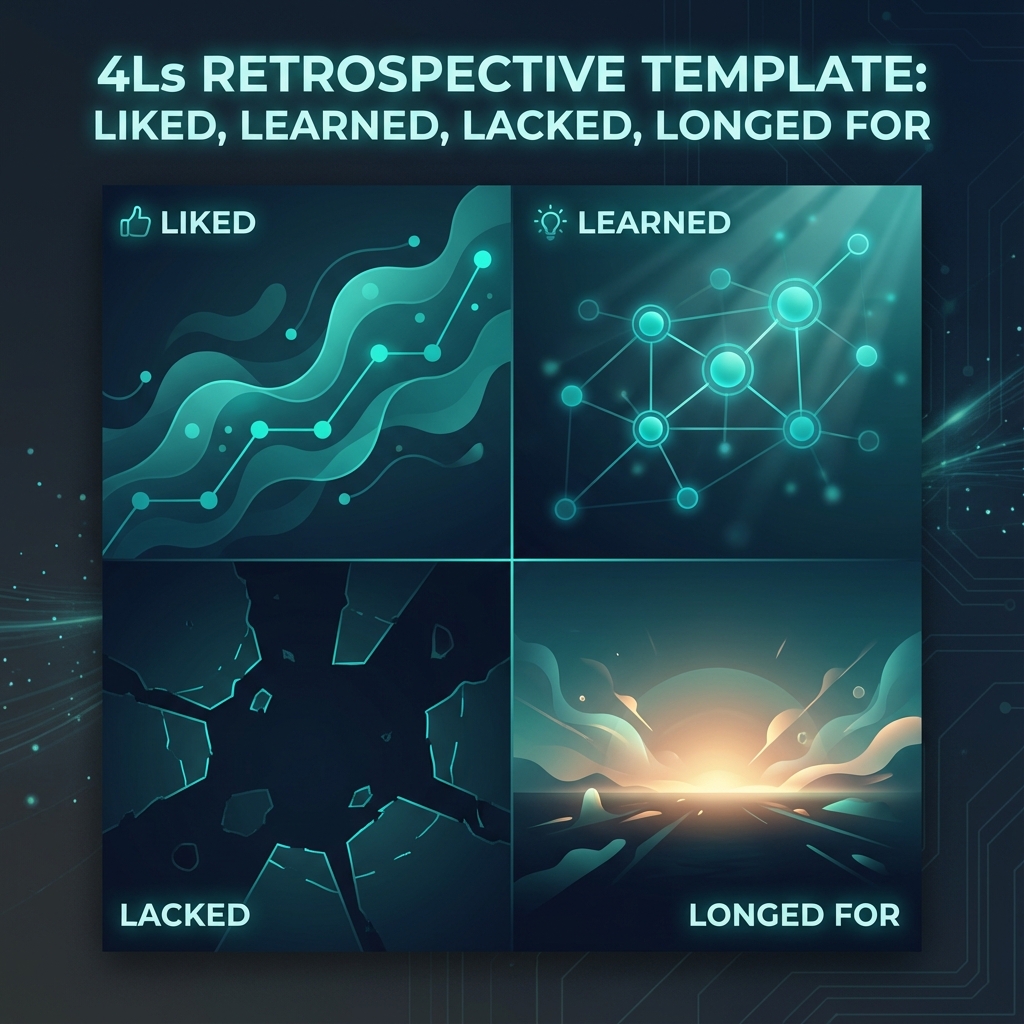
4Ls Retrospective Template: Liked, Learned, Lacked, Longed For
Most retrospectives focus on execution: What did we do? How fast did we do it?
The 4Ls framework (created by Mary Gorman and Ellen Gottesdiener) focuses on learning and desire. It asks the team to step back from the daily grind and think about their professional growth and emotional needs.
The 4 Ls Explained
👍 Liked
What did you appreciate? What brought you joy?
Examples:
- "The collaboration on the new API."
- "Having flexible hours this week."
- "The new coffee machine!"
🧠 Learned
What new knowledge did you gain?
Examples:
- "I learned how Docker networking works."
- "I learned that our customers use the app mostly on mobile."
- "I learned that deploying on Fridays is a bad idea."
📉 Lacked
What was missing? What slowed you down?
Examples:
- "Lacked clear acceptance criteria."
- "Lacked access to the production logs."
- "Lacked sleep due to the pager duty."
🧞 Longed For
What do you wish for? (Dream big!)
Examples:
- "I long for automated E2E tests."
- "I long for a dedicated designer."
- "I long for a 4-day work week."
Why "Learned" Matters
The "Learned" quadrant is the secret weapon of high-performing teams.
If a team isn't learning, they are stagnating. By explicitly asking "What did you learn?", you force team members to reflect on their growth. If this column is empty week after week, it's a huge red flag that the work has become repetitive.
Why "Longed For" Matters
"Longed For" allows the team to dream. It breaks them out of the "fix the bug" mindset and into the "architect the future" mindset.
Even if you can't give them a 4-day work week immediately, knowing that they want it helps you understand their motivations.
Conclusion
The 4Ls is a refreshing break from the standard retro. It humanizes the team and focuses on growth.
Try it now: Clear Retro has a beautiful 4Ls template ready to go.