
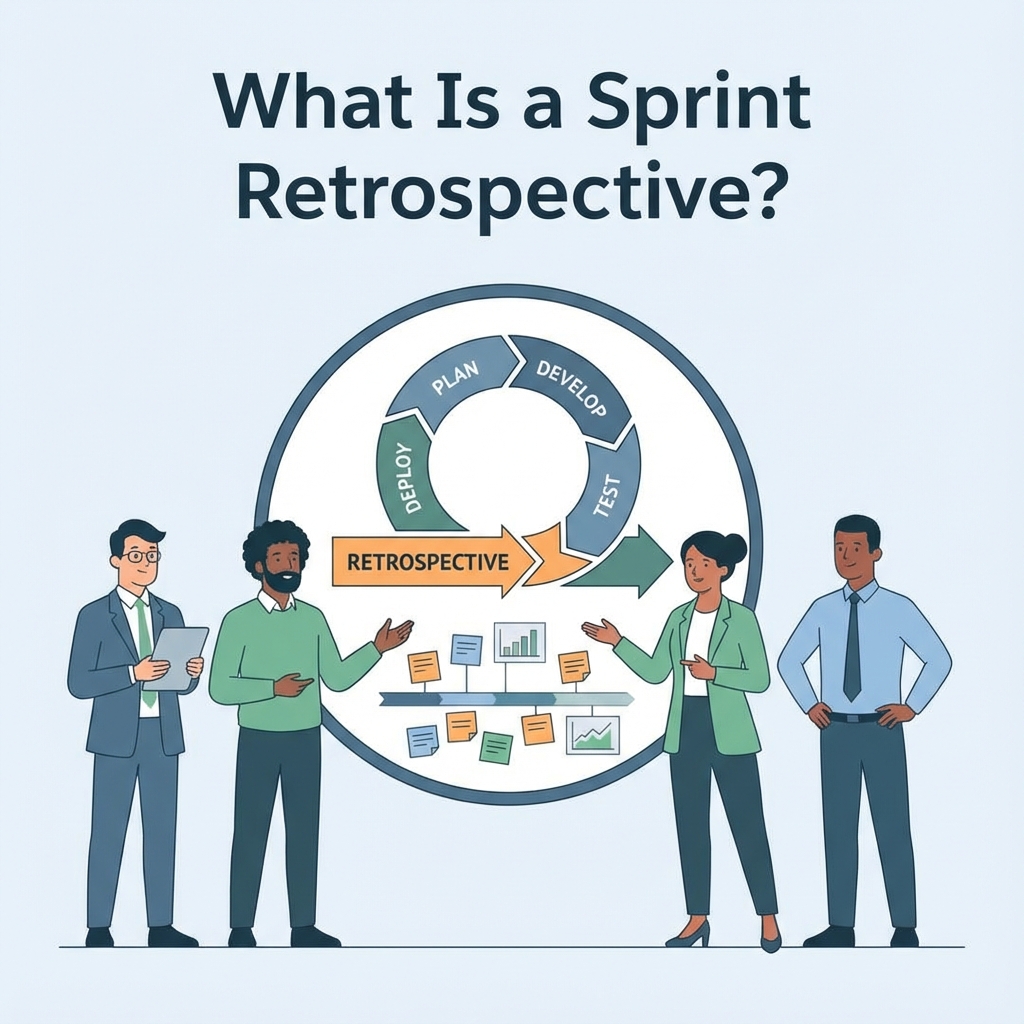
What Is a Sprint Retrospective? (Complete Guide for 2026)
The Sprint Retrospective is widely considered the most important event in the Scrum framework. It is the dedicated time for a team to pause, reflect, and tune their engine. But in 2026, the retrospective has evolved. It's no longer just about "What went well" and "What didn't go well". It's about data-driven insights, AI-powered analysis, and psychological safety in distributed teams.
In this comprehensive guide, we will cover everything from the basic structure to advanced facilitation techniques used by elite engineering teams at companies like Google, Netflix, and Spotify.
The Shift to Data-Driven Retrospectives
Historically, retrospectives were purely qualitative. "I felt the sprint was rushed." "I think the requirements were unclear." While valuable, feelings are subjective. The trend in 2026 is to back these feelings with quantitative data.
Key Metrics to Review:
- Cycle Time: How long does it take for a ticket to go from "In Progress" to "Done"?
- PR Review Time: Are code reviews becoming a bottleneck?
- Planning Accuracy: Did we deliver what we committed to? (Say/Do Ratio)
- Defect Escape Rate: How many bugs were found in production?
By bringing this data into the retrospective, the conversation shifts from blame to problem-solving. Instead of "Reviewers are too slow," the conversation becomes "Our average PR review time is 24 hours. How can we get that down to 4 hours?"
The 5 Stages of a Retrospective (Refined)
According to Esther Derby and Diana Larsen, an effective retro follows a 5-stage structure. Here is how modern teams apply it:
1. Set the Stage
Goal: Get the team engaged and safe to speak.
2026 Twist: Use "Check-in" questions that relate to energy levels or focus. Example: "On a scale of 1-10, how much mental capacity do you have for this meeting?"
2. Gather Data
Goal: Create a shared picture of what happened.
2026 Twist: This is where your online retrospective tool shines. Teams create cards for "What went well", "What didn't", etc. But now, we also overlay the Sprint Burndown Chart or DORA metrics on the screen.
3. Generate Insights
Goal: Interpret the data and find root causes.
2026 Twist: Use AI Grouping. Instead of spending 20 minutes manually grouping similar sticky notes, tools like Clear Retro use Gemini/GPT models to instantly cluster themes (e.g., "Deployment Issues", "Requirements Churn"). This gives the team 20 extra minutes to actually discuss the solutions.
4. Decide What to Do
Goal: Select the top 1-2 items to improve.
2026 Twist: Focus on SMART goals (Specific, Measurable, Achievable, Relevant, Time-bound). Don't just say "Improve testing." Say "Add E2E tests for the checkout flow by Friday."
5. Close the Retro
Goal: Thank the team and formally end the meeting.
2026 Twist: The "ROTI" (Return on Time Invested) score. Ask the team to rate the meeting itself. If the retro was a waste of time, you need to retro the retro!
Psychological Safety: The Foundation
Google's Project Aristotle found that Psychological Safety was the #1 predictor of high-performing teams. In a retrospective, this means team members must feel safe to admit mistakes without fear of punishment.
How to build it:
- Prime Directive: Read the Retrospective Prime Directive at the start of every meeting: "Regardless of what we discover, we understand and truly believe that everyone did the best job they could..."
- Anonymous Feedback: Use tools that support Private Mode (like Clear Retro). This prevents "Groupthink" and allows introverts to share honest feedback without being swayed by the loudest voice in the room.
- Blameless Post-Mortems: Focus on the process failure, not the person failure. "The deployment script failed because of a missing check," not "John broke the build."
Why Most Retrospectives Fail (And How to Fix Them)
Even with the best intentions, retros can become "complaint sessions" that lead to no change. This is often called the "Retro Anti-Pattern".
❌ The "Complaint Fest"
Everyone vents about problems, but no action items are assigned. The same problems re-occur next sprint.
✅ The Fix: Action Bias
Limit the discussion to the top 3 voted items. Assign a specific owner to each. If it's not assigned, it doesn't exist.
❌ The "Manager's Monologue"
The manager or Scrum Master does all the talking. The team tunes out.
✅ The Fix: Rotate Facilitators
Let a different team member run the retro each time. This builds empathy and engagement.
Tools for 2026
While sticky notes on a whiteboard are classic, distributed teams need digital tools. The best tools in 2026 offer:
- Real-time Sync: No lag when typing.
- AI Summaries: Auto-generate an executive summary for stakeholders.
- Integrations: Push action items directly to Jira or Linear.
Clear Retro is designed specifically for this new era. It combines the speed of a local app with the power of cloud-based AI, ensuring your team spends less time organizing and more time improving.
Conclusion
The Sprint Retrospective is the heartbeat of Agile. If you skip it, your team's growth stalls. By adopting a data-driven approach, leveraging AI tools, and fostering psychological safety, you can turn this meeting from a "chore" into a competitive advantage.
Ready to run better retrospectives? Try Clear Retro for free today.